



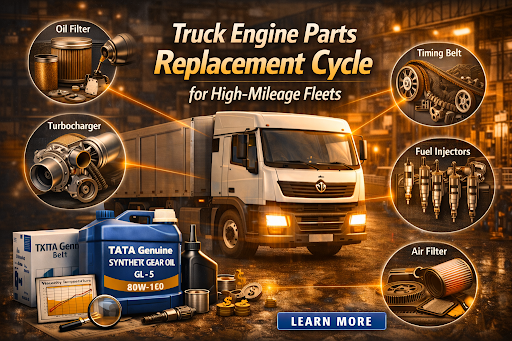
A high-mileage fleet requires more than keeping the vehicles moving; they require reliable maintenance practices that will help keep them safe and economical in the long run. Among other things, one aspect that is essential for fleet maintenance is knowing the replacement cycle of truck engine parts. Due to their high mileage and the distances covered, replacing parts in time is vital to avoid any accidents.
Why Replacement Cycles Matter
Trucks are used for heavy-duty purposes, and engines are subjected to tough conditions when doing so. Consequently, engine components tend to deteriorate after use for a certain period. Not having proper cycles of replacing parts can lead to a range of problems. Proper maintenance through planned replacement can help:
- Reduced downtime and repair costs
- Increase fuel economy
- Extend engine lifespan
- Ensure driver safety
Proactive replacement guarantees continuous operations and prevents unexpected malfunctions.
Key Engine Components and Their Lifespan
The lifetime of different engine components is dependent on the extent to which they are used, as well as the maintenance carried out. Some of the common engine components include:
- Engine Oil & Filters: Regular replacement every 15,000 to 25,000 kilometers, ensuring effective lubrication and cooling
- Fuel Injectors: Regular check and replacement every 100,000 to 150,000 kilometers for better fuel burning
- Air Filters: Regularly check every 20,000 to 40,000 kilometers, especially for vehicles driven in dusty areas
- Timing Belts & Chains: Regular replacement within 80,000 to 150,000 kilometers based on the manufacturer’s recommendations
- Turbochargers: Last long but must undergo regular checking
All of the above engine components serve an important function in making sure that the engine is well-maintained, and any malfunction can lead to further complications.
Building a Predictive Maintenance Strategy
An efficient fleet doesn’t just rely on set schedules but incorporates data, inspections, and experience. When the midpoint in terms of the lifespan of the engines is achieved, it becomes necessary to continue checking the truck engine parts since the wear and tear depend on mileage. The following methods may help to introduce predictive maintenance to fleets:
- Monitoring mileage and service history through digital means
- Performing regular engine diagnostics
- Training drivers to report early signs like unusual noise or reduced power
- Utilizing high-quality replacement parts that adhere to OEM standards
According to credible service providers and sources, the major requirement would be to use components that have been designed to ensure durability and compatibility. This ensures that the parts continue working without frequent faults.
Balancing Cost and Quality
While saving money is very important, it would only become more costly if you buy cheaper parts. Buying such components may indeed prove to be costly at first, but durable parts reduce the expenses incurred over time.
Points to Consider When Choosing Components
- Overall cost of ownership compared to mere purchasing prices
- Quality guarantee and performance assurance
- Specific part compatibility with certain truck types
The use of quality parts will decrease the frequency of replacements and ensure a stable fleet performance.
Smart Replacement for Long-Term Efficiency
When there are many miles driven per year, the priority should be the maintenance of stable performance. Proper inspection, analysis, and timely replacement of Truck engine parts will provide a solid ground for efficient operation. The process of fixing problems can be avoided by adopting a replacement strategy.
With a smart approach, which can be assured by implementing reliable solutions such as Tata Motors’ Durafit Parts, fleet reliability becomes a reality irrespective of the harsh environmental conditions. Through combining proven practices with superior parts, efficiency can be improved and costs saved.